Hackathons
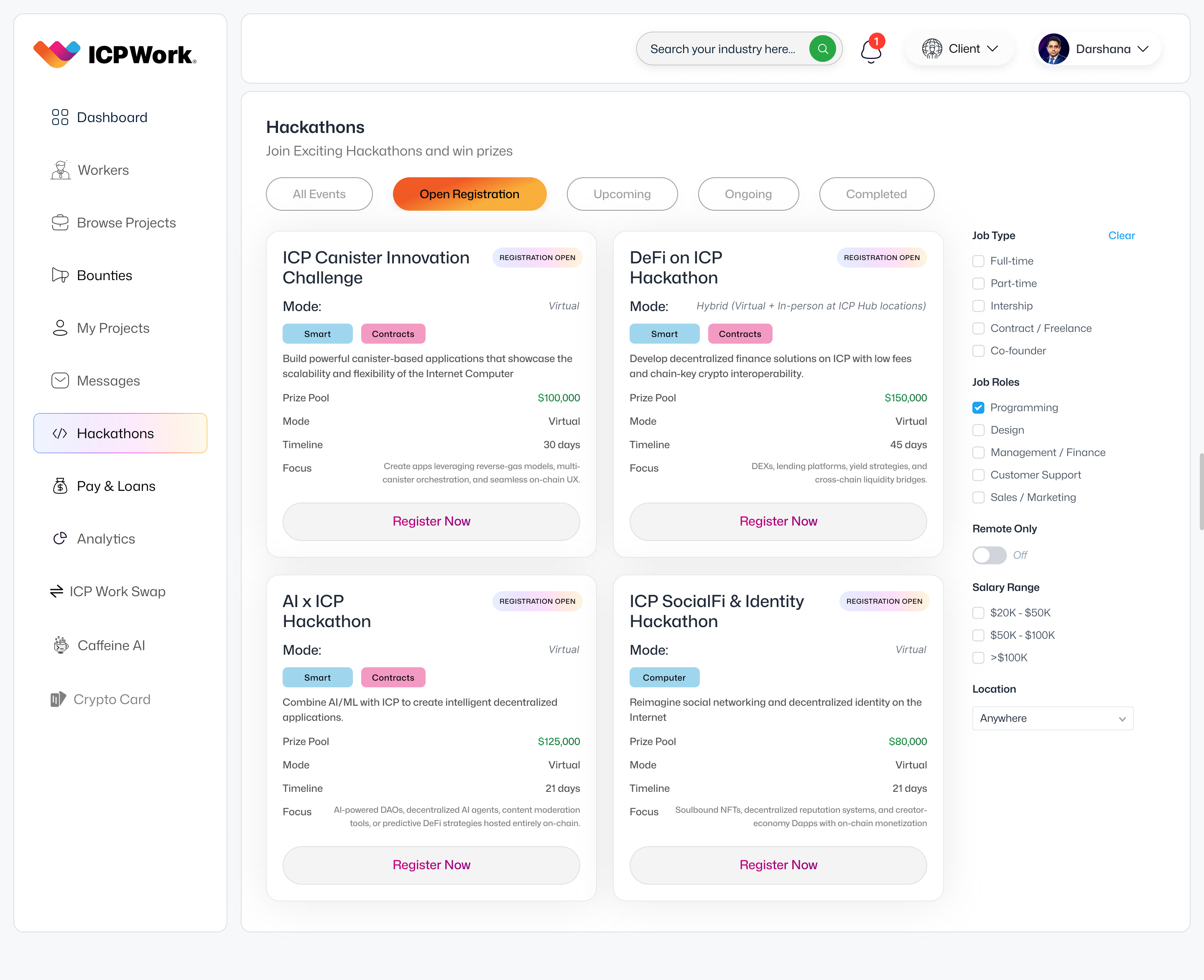
The Hackathons section on the ICPWork platform is a vibrant hub designed to foster rapid innovation, collaborative problem-solving, and community engagement within the decentralized ecosystem. This feature provides a structured environment where individuals and teams can come together to build, experiment, and showcase their technical prowess on specific challenges, often with significant rewards. Unlike traditional project work, hackathons are time-bound, intensive events focused on generating novel solutions and fostering a competitive yet supportive atmosphere.
Strategic Importance
The strategic importance of the Hackathons section is multi-faceted. For the ICPWork platform and the broader Internet Computer ecosystem, hackathons serve as powerful engines for innovation, driving the development of new applications, tools, and features. They attract top talent, stimulate creative thinking, and accelerate the adoption of new technologies. For participants, hackathons offer an unparalleled opportunity to:
- Showcase Skills: Demonstrate technical abilities and problem-solving capabilities in a high-pressure, real-world setting.
- Build Reputation: Earn recognition, build a verifiable on-chain portfolio, and establish credibility within the Web3 community.
- Network and Collaborate: Connect with like-minded developers, designers, and entrepreneurs, forming potential future collaborations.
- Learn and Grow: Rapidly acquire new skills and deepen understanding of specific technologies or problem domains.
- Earn Rewards: Compete for substantial prizes, often in cryptocurrency, and gain exposure to potential investors or employers.
For clients and sponsors, hackathons provide a cost-effective way to source innovative solutions to complex problems, identify emerging talent, and generate buzz around their projects or technologies. They are also excellent for community building and engaging with a passionate developer base.
User Interface (UI) and Key Features
The Hackathons section features a user-friendly interface designed to facilitate easy discovery, participation, and management of events. Key elements include:
Event Listings
A clear and concise listing of ongoing, upcoming, and past hackathons. Each listing typically includes:
- Hackathon Title: A descriptive name for the event.
- Theme/Challenge: A brief overview of the problem statement or area of focus.
- Dates: Start and end dates for the submission period.
- Prize Pool: The total value of rewards available to winners.
- Sponsors: Logos or names of organizations sponsoring the event.
- Call to Action: Buttons to 'View Details', 'Register', or 'Submit Project'.
Detailed Event Pages
Clicking on an event listing leads to a dedicated page with comprehensive information, including:
- Full Challenge Description: Detailed problem statement, rules, and judging criteria.
- Resources: Links to relevant documentation, APIs, SDKs, and starter kits.
- Mentors/Judges: Profiles of experts available to assist participants or evaluate submissions.
- Timeline: A breakdown of key dates, such as registration deadlines, submission deadlines, and judging periods.
- Prizes: A detailed breakdown of the prize distribution for top-performing teams.
- Team Formation: Tools or forums to help individuals find teammates.
- Submission Portal: A dedicated interface for teams to submit their projects, including code repositories, demo videos, and project descriptions.
Community and Collaboration Tools
Integrated communication channels, such as forums, chat rooms, or dedicated Discord servers, are often linked or embedded to facilitate collaboration among participants and interaction with mentors.
Leaderboards and Results
After a hackathon concludes, a public leaderboard displays the winning projects and teams, along with their scores and awards. This provides transparency and recognition for participants.
Technical Implementation
The Hackathons feature would leverage several ICP canisters for its robust operation:
- Event Management Canister: Stores all hackathon details, rules, timelines, and participant registrations.
- Submission Canister: Securely receives and stores project submissions, including code hashes and metadata.
- Judging Canister: Manages the judging process, allowing judges to submit scores and feedback, and aggregates results.
- Prize Distribution Canister: Integrates with the Payment Escrow Canister to automatically distribute rewards to winning teams based on judging outcomes.
- User Management Canister: Links participant profiles and reputation scores to their hackathon performance.
The decentralized nature of these canisters ensures that hackathon data, submissions, and results are immutable, transparent, and censorship-resistant, upholding the integrity of the competition.
Conclusion
The Hackathons section is a testament to ICPWork's commitment to fostering innovation and community-driven development. By providing a dynamic platform for competitive building and collaboration, it not only accelerates the growth of the Internet Computer ecosystem but also empowers individuals to hone their skills, build their reputation, and contribute to groundbreaking decentralized solutions. It is a powerful mechanism for talent discovery and a key driver of the platform's vibrant and forward-thinking community.